


What I learned on my sabbatical. In Europe.
I know what you’re thinking, why does a self-employed 67-year-old architect need a sabbatical? Aren’t those for professors?
Yes. You are correct. But Europe offers so much in the way of architectural history, design and culture that I needed a complete, work-free immersion. So my wife and I took most of April, May, and June off and went to stay near Amsterdam.
Why Amsterdam? No, not the pot! Instead because Amsterdam is English-speaking, central to Northern Europe, international, and very flat.
Why flat? When I’m not designing ADUs or sketching out home additions you can find me geared up and on my Cervelo or my Cannondale bike or once in a great while on a rented e-bike.
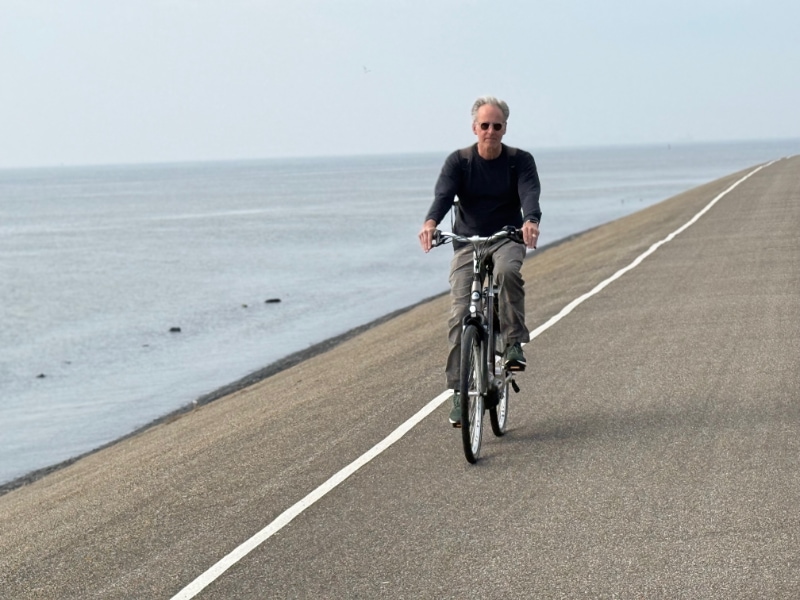
The Netherlands is known for great dedicated paths, and a culture that is full on biking from the inside out. (As anyone who’s been to Amsterdam and in advertently stood in the way of a biker on bike path will attest. Which may have been a family member.)
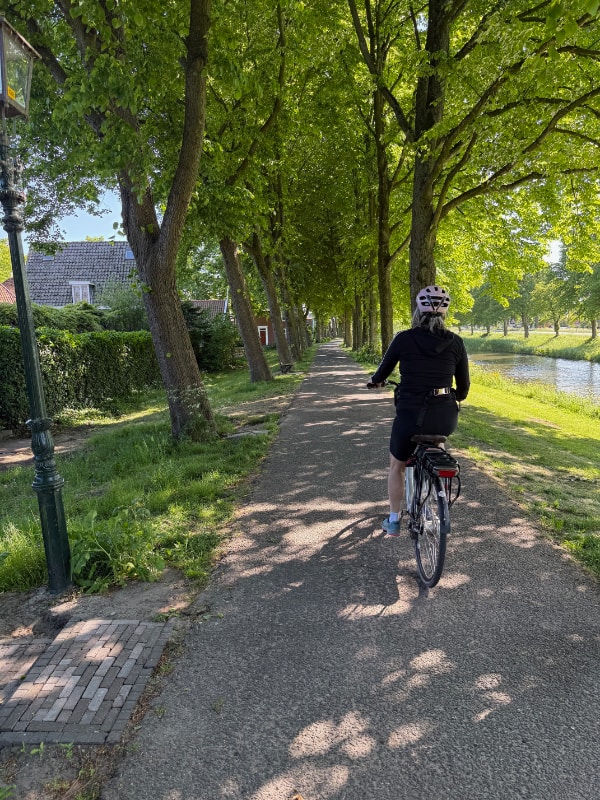
Everyone bikes, including grocery store clerks, teachers, judges, hotel managers and bartenders. And all ages; from small children, to teens, and grandparents. It’s because the cities in the Netherlands are designed for cyclists- just follow the red asphalt path and you can get just about anywhere. There’s great signage and the trails are wide and exceptionally well maintained. The weather can be iffy, but it’s a gorgeous ride along slender, winding canals, through medieval cities, and along green pastures (dotted with cows, sheep and horses) that stretch for miles- I mean kilometers. In some areas you’ll glide under the leafy canopy of 100-year-old trees.
Not only does the architecture cover nearly 1,000 years (think the Romans, the Appian Way, Hadrian’s Wall, the Vikings, the expanse of the Ottoman empire, etc. ) but what influences design is also surprising. Outside of culture changes and design eras, how a building was taxed had a huge impact on the way a structure was built.
For example: Ever heard the phrase “stealing daylight”? Ever noticed bricked- in windows in the United Kingdom? On a tour of Dublin we learned that building owners in the 1700s were taxed on the number of windows a building had. So, in order to evade high taxes, builders would often make small window areas or brick-in windows to lower their fee, making for dark interiors and a lack of interior sunlight. Bank of Ireland is a famous example of this.
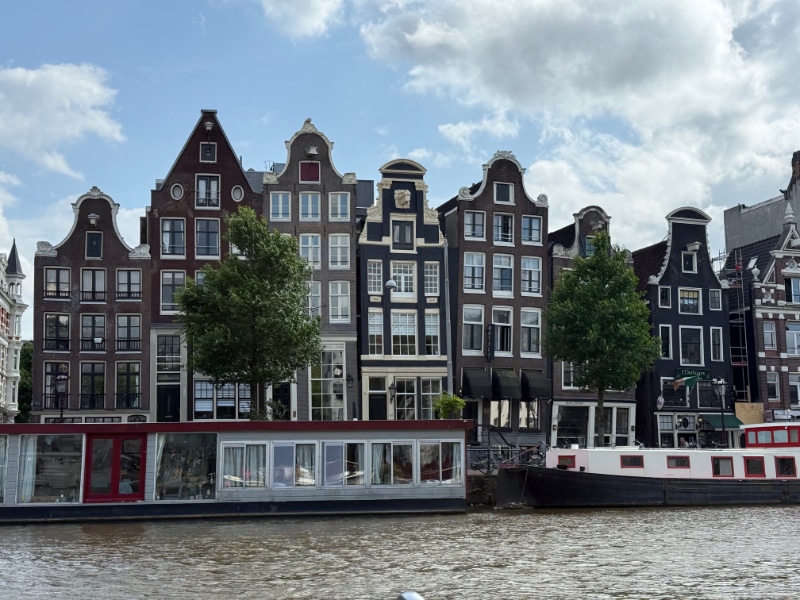
Ever notice how tall and skinny the buildings that line the canals in Amsterdam are? On a canal tour of the city we were told the culprit is again taxes! Building owners were taxed on the width of the structure, not the height. Hence you have tall and skinny design (and inextricably narrow, handrail-less stairwells).
And where did the mansard roof come from? If you said taxes then bingo! Owners (mostly in the area of Paris) were taxed based on the number of floors below the roofline. The mansard roof slopes in such a way that owners could create a living space that was technically below the roofline and they would not be taxed on that “extra” floor, making for lower taxes for the owner. In the US we saw a resurgence of this design in suburban houses (and fast- food chains such as McDonalds ) in the late 1960s to early 1970s.
Being on sabbatical gave us the space to really get to know our town, Purmerend, which is about 10 miles north of Amsterdam. It’s a quaint old cow-trading village that now attracts Amsterdam retirees. We got to know the landscape, history, and people. And while sightseeing was memorable (Utrecht, Edam and the island of Texel come to mind) we were most moved by the relationships we formed.
By staying nearly three months, we got to know the manager of the fitness club, the owners of the bike shop, the barista at the local shop (okay, it was my wife who got to know the barista), even our Airbnb owner. We no longer had to rely on the US media to understand what’s happening “over there.” We lived it, every day, every night, for weeks and months on end.

Sabbatical opened a new door for us. We got a new perspective on the way things were, the way things are, and the way things can be. One might even say, on sabbatical we truly lived.


