Three Things I Know About Decks. And One Mistake Many People, Even Builders, Make.
It may seem like a fool’s errand to spend a lot of money on an outdoor space in Minnesota. You could say Minnesota weather is a lot like Little Miss Muffet, when it’s good it’s very, very good and when it’s bad it’s horrid.
Still, from April through October there’s no better place to be than under a blue sky soaking in the sun out on your deck.
Three things I know about decks
After an extensive remodel and addition to my own St. Paul turn-of-the-century home last year, this summer I designed and built a deck. And while I’ve probably designed and built 30 or more decks, starting when I was 15 and working with my dad on remodels in La Crosse, WI, there are three things I can say I know for sure about what to do when building one:
- Use rust-proof or treated deck screws. They might not need to be stainless steel, but they do need to be rust proof.
- Use a durable wood. I recommend cedar (which ages handsomely) or Brazilian walnut / ipe (pronounced e-pay). Green wood can also be used but it doesn’t look as good. Yes, it costs more. But it will last years longer, require less maintenance because it won’t warp, splinter or rot. You will regret using a cheap composite that flakes or an inferior faux lumber material that is prone to giving off fiberglass slivers that impale bare feet, hands and thighs. Spend the money up front on a durable hardwood.
- Fill your screw holes. While mostly aesthetic, this will also help with durability and longevity. Besides, those hole edges can be rough and catch on clothing and skin. It costs next to nothing and only takes a tiny bit of focus and an hour or two of time. I used ipe plugs from Arrow Building Center in Hudson, WI.
Five other handy tips I have for deck design
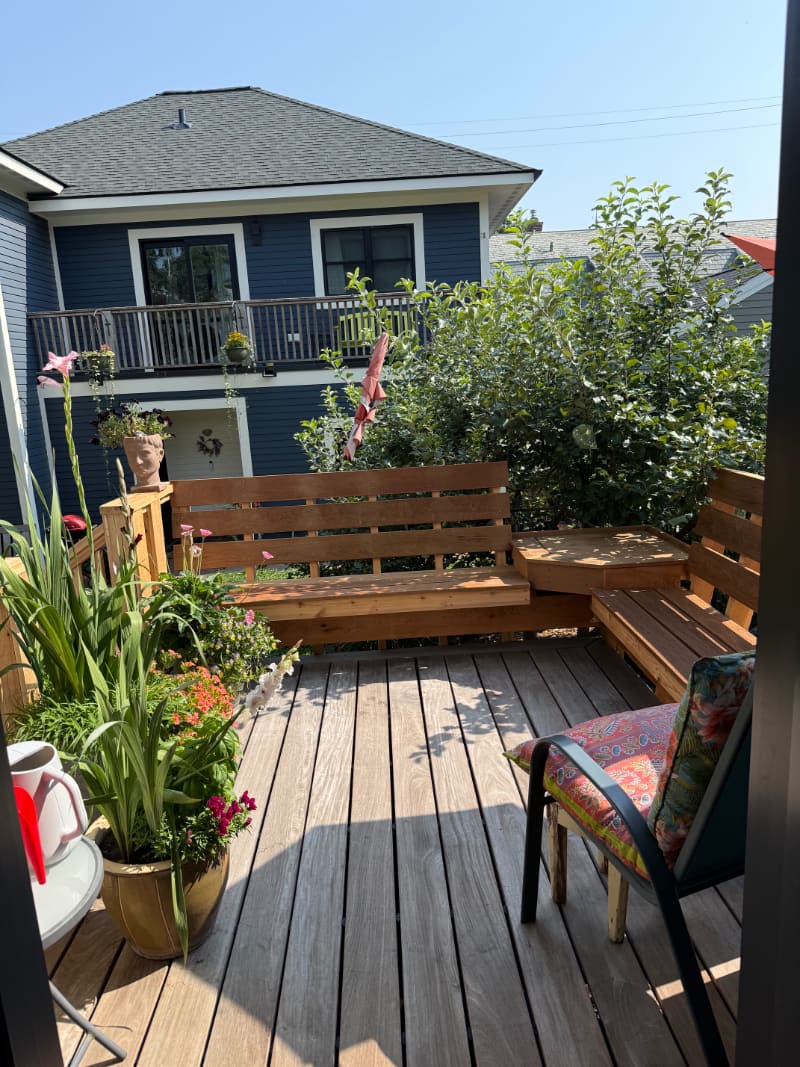
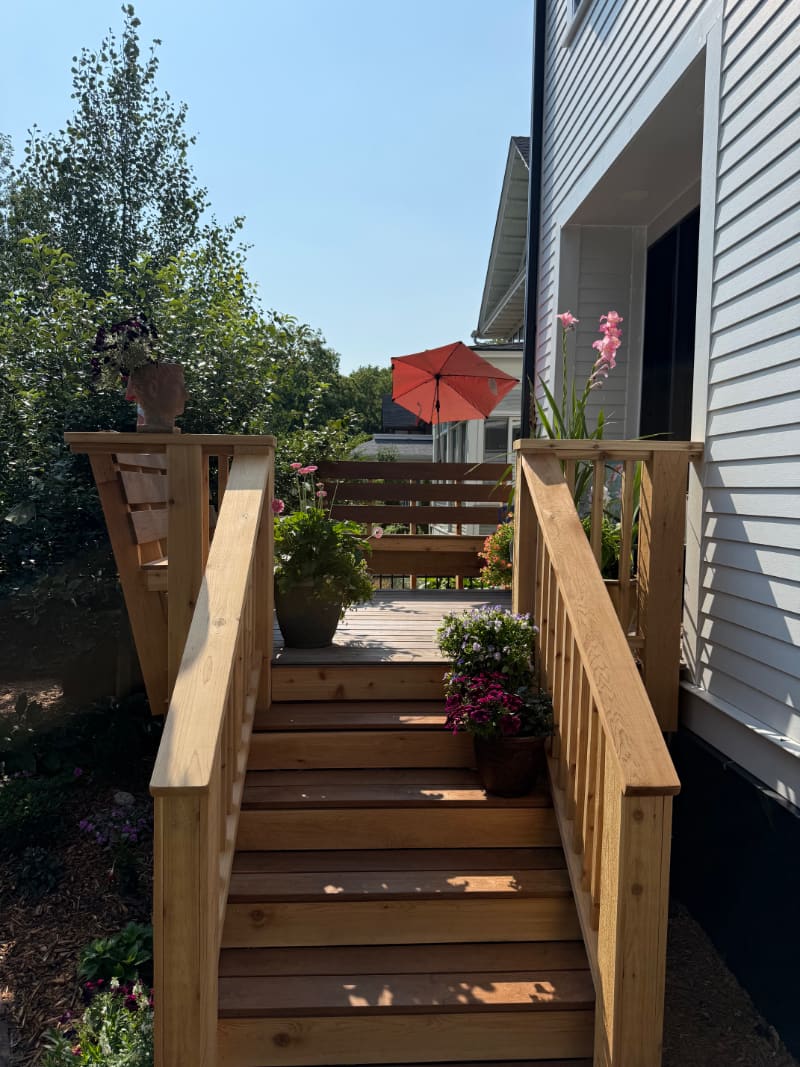
1) Frame the corners or edges of your deck with large potted plants. This creates a privacy screen, adds color and texture and is nice to look at. 2) Install built-in bench seating and get cushions that fit. First find the outdoor cushions (in a fabric such as Sunbrella fabric) in the size you want and then design the bench seats so that those cushions fit the seats. You can do it the other way around but then you’ll need to find someone who makes custom outdoor cushions (it’s expensive and can take weeks). 3) Design a built-in corner table, this makes eating and drinking and reading so much easier to navigate. It never blows over and is never in the way. 4) Make your steps extra sturdy. I suggest doubled-up stringers made with 2 x 12”. 5) Finally, have your steps enter at the side of the deck, so you walk up, turn, and then enter the house. Do not put the stairs directly across from the house entrance. Why? Because having the stairs right across turns the deck into a hallway and divides it in half.
The biggest mistake people make (even builders!)
They make the deck too big. If you regularly entertain large groups of people outside all summer long then yes, go big. But if you’re a couple or a family, you don’t need a huge deck. Really. A well-designed deck is an intimate place to hang out, an extension of your living space for a few months each year.
If you live in the city, on a small city lot, then you don’t want your deck to take up your whole yard. You want it big enough that you’re not knocking knees when you sit together, but not so big that you have to raise your voice to talk.
My deck is 8’ x 8’. We just had a party for 10 people and had a seating space in the yard and some seating on the deck. It was a nice way to get people to move around.
Code for decks vary by city
You will likely need a permit for a deck. Your deck will then have to pass inspection. It’s wise to know what your city code requires before you start design or construction. If you have the budget, you can have a structural engineer review your plans. If you’re handy and want to do it yourself, review Saint Paul deck codes.
Always check the code on these three things before designing
Check these codes: the required height above grade allowed, the type of railing around the deck you’ll need and the rise and run and handrail requirements for your steps.
You’ll also want to know if you’ll need to have an exterior electrical outlet accessible to your deck. Again, check these things out before you start your design, it will save you time, money and prevent a “I could’ve had a V-8” -style head slap later.